October 1, 2026

Q4 brings retailers a surge of new customers, but transaction data alone provides limited insight into what will make those customers return. Customer intelligence begins building context from purchases, preferences, engagement, feedback, reviews, and behavioral signals while the relationship is still developing.
Starting before the holiday rush gives retailers more information to work with when January retention efforts begin. Cohora can typically be integrated in one to weeks, operates alongside the existing customer experience, and charges based on engagement. Alfred then helps teams analyze those connected signals to identify segments, retention risks, and potential revenue opportunities faster.
The goal is simple: enter January knowing more about the customers acquired during Q4 than what they bought.
--
For many retailers, Q4 will bring the largest influx of customers they see all year.
Holiday demand increases traffic. Acquisition budgets rise. Promotions become more aggressive. New customers arrive through paid media, search, social, marketplaces, referrals, gifting, and seasonal shopping.
By January, retailers will know exactly how Q4 performed. They will know revenue, conversion rate, average order value, acquisition costs, channel performance, best-selling products, and which promotions drove the most purchases.
They may know considerably less about the people behind those transactions.
Why did a new customer choose the brand? Was the purchase for themselves or someone else? What else are they interested in? What would bring them back? Which customers are beginning to form a relationship with the brand, and which simply responded to a promotion?
Those questions become much more important once the holiday acquisition machine slows down.
And January is late to start asking them.
Retailers spend months preparing for holiday revenue. Campaigns, promotions, inventory, creative, merchandising, and acquisition strategies are all designed to capture as much seasonal demand as possible.
The volume of Q4 activity creates another valuable opportunity: learning.
Every new customer begins creating signals from the moment they interact with a brand.
Some are transactional: products purchased, order value, discount usage, returns, and purchase frequency.
Others happen around the transaction: preferences, engagement, feedback, reviews, loyalty participation, community activity, content interactions, and responses to different experiences.
Connected over time, those signals provide a much richer picture than a transaction alone.
Knowing that someone purchased a $75 skincare product is useful.
Knowing that the same customer has shown interest in another category, engaged with educational content, expressed a specific preference, and behaves similarly to customers who historically purchase again gives the retailer far more context for deciding what to do next.
Q4 gives retailers an unusually concentrated period to begin building that understanding.
Customer databases are very good at documenting what happened.
A customer purchased a product on November 27. They spent $112. They used a 15% discount. They came through a paid social campaign.
Those facts help explain the transaction. They do not necessarily explain the relationship.
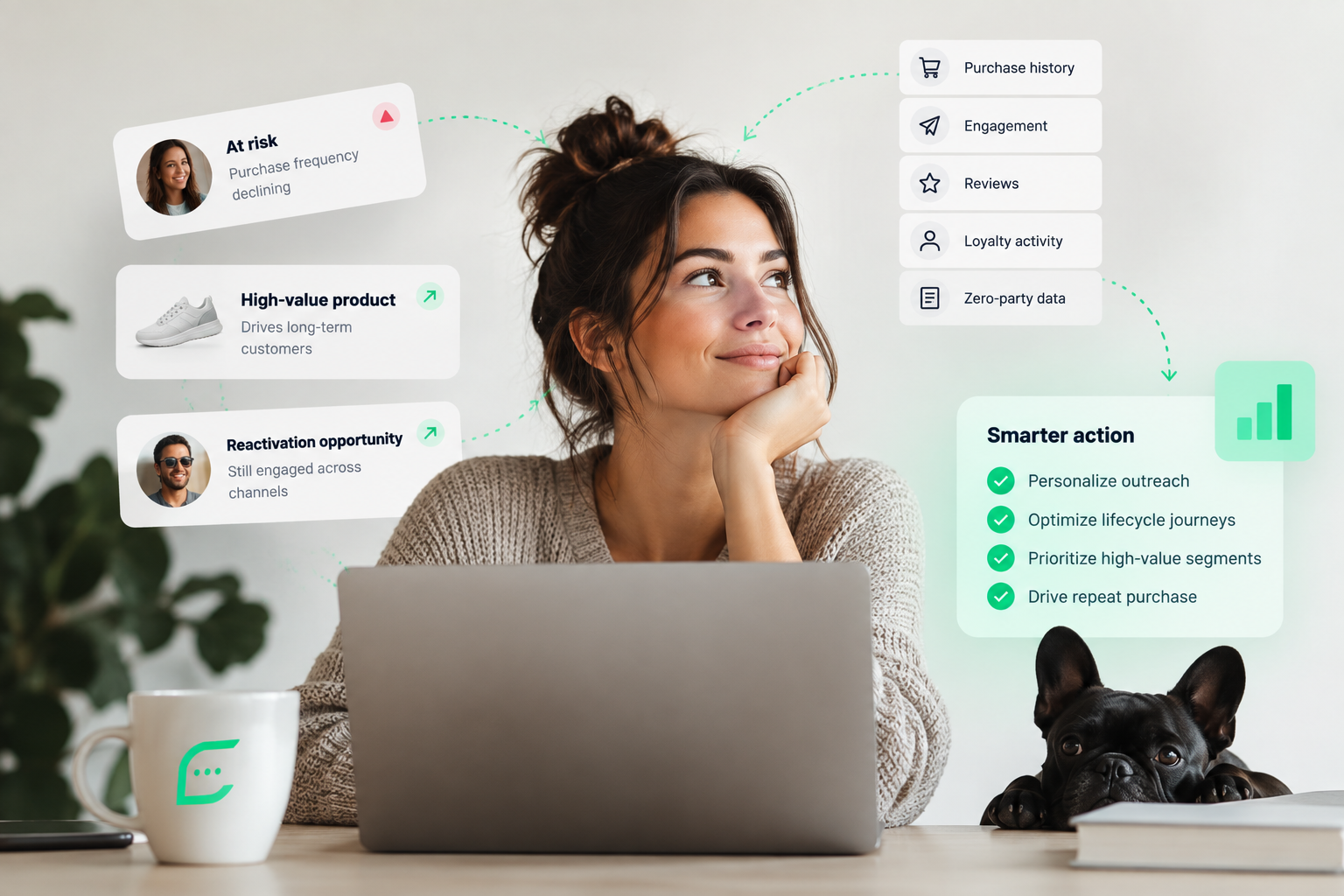
Customer intelligence adds context by connecting purchase data with the broader signals customers create across their interactions with a brand.
For a first-time holiday buyer, that can help answer much more useful questions:
The information needed to answer those questions begins accumulating long before a retention campaign is sent.
The customer you paid to acquire in November does not become free to reach in January.
If the retailer enters the new year knowing little beyond what that customer purchased, the familiar playbook starts again.
Send another email. Retarget them. Show them another product. Offer 10% off. Increase the discount if they still do not respond.
In some cases, the retailer ends up paying to reacquire someone it already paid to acquire a few weeks earlier.
Retargeting and promotions can absolutely play a role in retention. They become less effective when they are being used as substitutes for customer understanding.
Consider several first-time holiday customers who all made purchases of similar value.
One may need education about another product category. Another may respond to community participation. Another may care about early access. Another may already be showing signs of disengagement. Another may simply have been purchasing a Christmas gift and have little natural reason to return.
A blanket win-back offer treats all five the same.
Customer intelligence helps reveal why they are different.
Customer understanding develops as signals accumulate.
Purchase behavior provides one layer. Engagement adds another. Preferences, reviews, community participation, category interest, promotional responsiveness, and changes in activity provide additional context.
Over time, patterns become easier to recognize. Meaningful customer segments become clearer. Changes in behavior become visible.
Some of that information can be analyzed retrospectively. Some cannot.
A preference that was never captured cannot be reconstructed months later.
An engagement signal that was never observed cannot be added back into the customer journey.
If the first 60 days of a customer relationship pass with little understanding beyond transaction history, some of the most useful context from that period may already be gone.
This gives customer intelligence a time component that many other software investments do not have.
Waiting until January does more than delay access to technology. It delays when the learning begins.
Retail teams are right to be cautious about introducing major technology projects immediately before the holidays.
Q4 is a poor time for lengthy migrations, complicated integrations, disruptive workflow changes, or projects that consume significant marketing and technical resources.
Cohora was designed around a lighter model.
The platform can typically be integrated in just one to two weeks and then operates alongside the existing customer experience, building intelligence as customers engage with the brand.
Cohora connects transactional data with first- and zero-party data, engagement, preferences, reviews, and other behavioral signals to create richer customer profiles over time.
Its pricing model is also tied to engagement rather than simply charging for the total size of a customer database.
That matters during Q4 because the platform can begin learning without becoming the center of the retailer's holiday operations.
A richer customer profile is useful only when teams can understand what it means.
As customer signals accumulate, the amount of information quickly becomes difficult to analyze manually. Purchase history, engagement patterns, preferences, behavioral changes, and segment movement may all contain useful clues, but connecting them traditionally requires reports, analysts, and time.
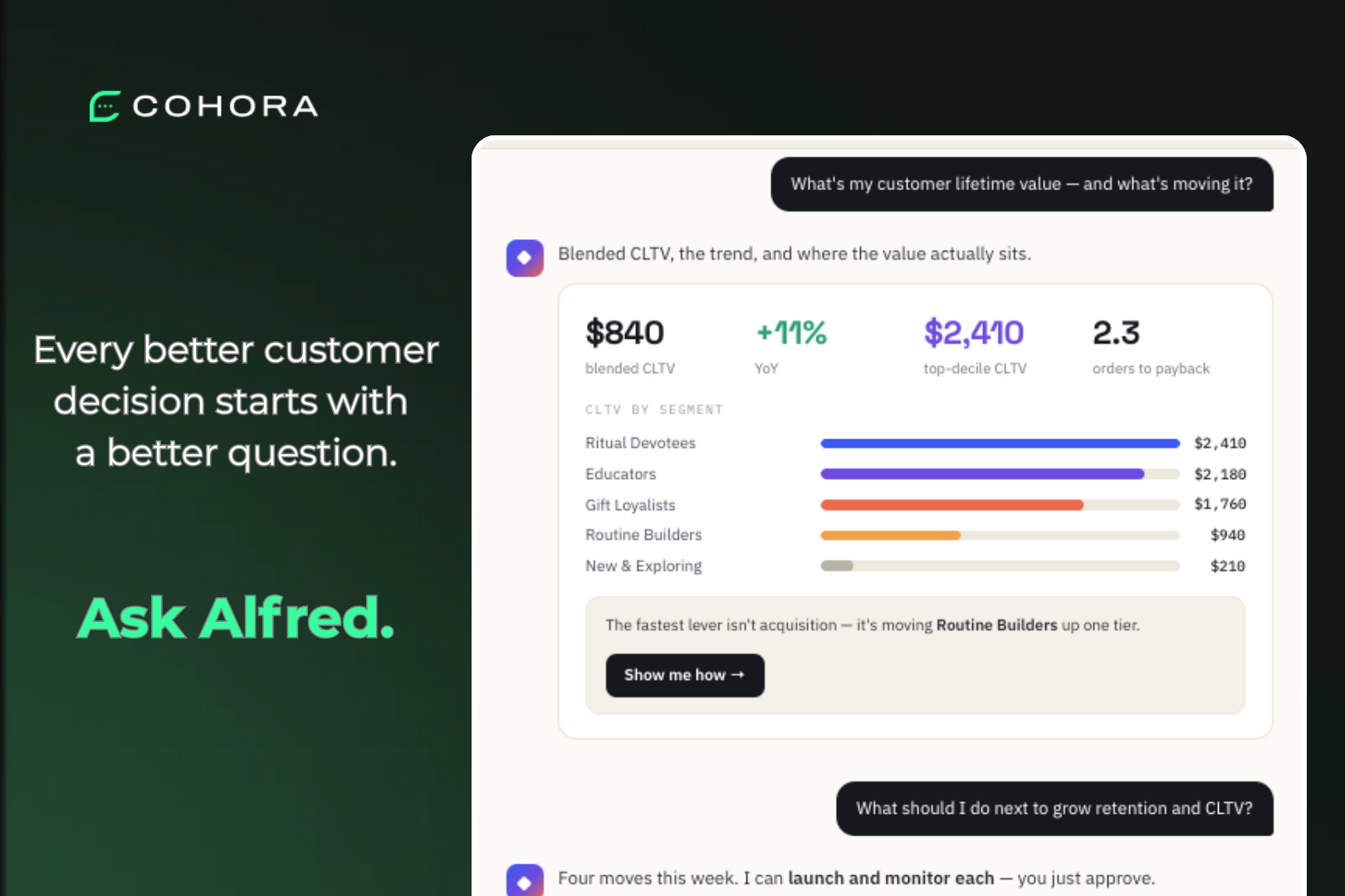
Alfred, Cohora's AI customer intelligence analyst, helps teams interrogate that connected customer data directly.
Instead of beginning with another dashboard, marketers can begin with a business question.
Which Q4 customers appear most likely to purchase again?
Which newly acquired customers are showing early signs of disengagement?
What behaviors are common among customers who make a second purchase?
Which customer segments represent the strongest retention opportunity?
Where are there revenue opportunities within customers we already acquired?
Alfred analyzes the available customer intelligence to surface relevant segments, patterns, retention risks, and opportunities.
For a retailer entering January with thousands of new customer records, that can change the starting point considerably.
Instead of asking, "How do we get all these people to buy again?" the team can ask, "What have we already learned about which customers are most likely to return, what they care about, and where we should focus?"
Holiday customers can create value long after December.
The difference is what the retailer carries into January.
A database filled with new email addresses and transaction histories has value.
A customer base with growing profiles, connected behavioral signals, identifiable segments, emerging retention risks, and a clearer understanding of what different customers respond to has considerably more.
Customer intelligence cannot guarantee that a first-time holiday shopper becomes a loyal customer.
It can give the retailer a much stronger foundation for deciding what happens next.
For retailers expecting their largest influx of customers during Q4, the timing question is therefore larger than whether another software purchase can wait until 2027.
It is a question of when they want to start learning from the customers they are about to spend heavily to acquire.
By January, the transactions will already have happened.
The customer relationships will already have started.
And the earliest clues about what those relationships could become will already be there.
Customer intelligence is the connected understanding of customer transactions, behaviors, preferences, engagement, feedback, and other signals. It provides context around what customers do and can help retailers make better decisions about retention, personalization, loyalty, and growth.
Q4 often brings the largest concentration of new customer activity of the year. Starting customer intelligence before that activity begins allows retailers to learn from customer interactions as they happen rather than relying primarily on transaction history after the holiday period ends.
It can provide retailers with more context for deciding which customers may need an incentive and which may respond better to other experiences, products, content, or engagement. That allows retention strategies to become more targeted rather than relying on the same promotion for every customer.
Cohora can typically be integrated in approximately two weeks, depending on the retailer's existing systems and implementation requirements.
Cohora is designed to add a customer intelligence layer across existing customer data and engagement signals. It can complement systems that manage transactions, CRM, loyalty, messaging, analytics, and other parts of the customer experience.
Alfred is Cohora's AI customer intelligence analyst. It helps teams ask questions of connected customer data, analyze behavioral signals, identify meaningful segments, surface retention risks, and uncover potential revenue opportunities.
Some customer context can be analyzed retrospectively, but signals that were never collected cannot be recreated later. Starting before Q4 allows customer understanding to develop during the period when new customers are most actively interacting with the brand.

.svg)