September 15, 2026
Customer intelligence helps ecommerce teams understand why customers behave the way they do, identify retention risks and opportunities, and decide what action to take next.
In our last post, we explored 10 customer questions your dashboard can’t answer, including which customers are disengaging, what separates repeat buyers from one-time buyers, and what may bring dormant customers back.
Those questions matter because dashboards are usually very good at showing what happened.
Customer intelligence helps teams go further.
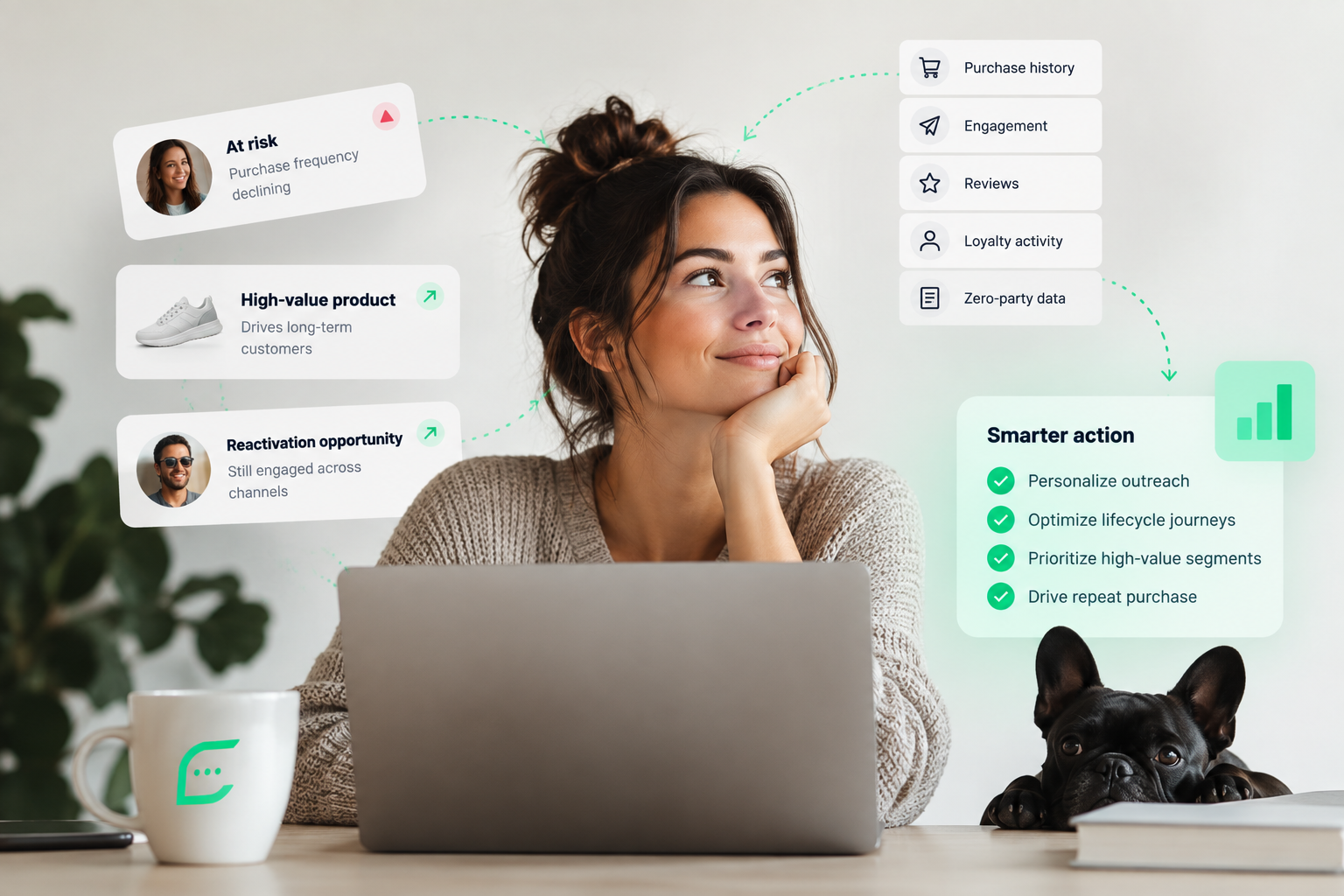
It connects signals like purchase history, engagement, preferences, reviews, loyalty activity, and behavioral changes to help explain why something may be happening and what your team should investigate next.
That matters because an insight alone does not improve retention.
What you do with it does.
Here are six ways customer intelligence can turn customer data into smarter retention, lifecycle, and growth decisions.
Customer churn rarely begins the moment someone stops buying.
Changes in purchase frequency, engagement, loyalty activity, browsing behavior, or other customer signals may appear earlier.
The insight:
Customer intelligence can help identify customers or segments whose behavior is beginning to change in ways that may indicate declining interest.
What to do next:
Teams can prioritize those customers for earlier intervention through more relevant messaging, personalized outreach, adjusted lifecycle journeys, or targeted retention campaigns.
The shift is important:
Instead of reacting after churn, you can begin responding to retention risk earlier.
Repeat purchase rate tells you how many customers came back.
It does not necessarily explain why they came back.
Customer intelligence can help teams compare the behaviors, products, preferences, engagement patterns, and experiences associated with repeat purchasers.
The insight:
You identify signals that appear more frequently among customers who make a second, third, or fourth purchase.
Those signals might include:
What to do next:
Lifecycle teams can reinforce the behaviors and experiences associated with repeat purchasing instead of treating every first-time buyer the same.
The question changes from:
How do we get more customers to buy again?
to:
What conditions are already present among the customers who do?
Your best-selling product is not always the product that creates your best customers.
One product may generate significant first-order revenue but attract customers who rarely return.
Another may generate less initial revenue but consistently lead to higher repeat purchase rates, stronger retention, or higher lifetime value.
The insight:
Customer intelligence can reveal which products, categories, and purchase patterns are associated with stronger long-term customer value.
What to do next:
Teams can use that information to improve:
Instead of evaluating a product only by its immediate revenue, you can also evaluate the customer relationship it creates.
Purchase history is valuable, but it only tells part of the story.
Knowing that someone bought a skincare product, pair of shoes, or supplement does not necessarily tell you why they chose it.
Preferences, reviews, surveys, engagement, loyalty activity, and other first-party and zero-party signals can provide additional context.
The insight:
You gain a clearer understanding of customer interests, motivations, preferences, and pain points.
What to do next:
Personalization can move beyond basic logic like:
Bought Product A → Recommend Product B
and toward messaging and experiences based on what the customer has actually told you or demonstrated through behavior.
That creates a stronger foundation for lifecycle marketing, retention, and customer experience.
Not every inactive customer has the same likelihood of returning.
Two customers may both be six months removed from their last purchase, but their current relationship with the brand could be very different.
One may have completely disengaged.
Another may still open emails, visit the website, engage with loyalty, browse products, or interact with the brand in other ways.
The insight:
Customer intelligence can help identify dormant customers or segments that still show meaningful signs of interest or intent.
What to do next:
Reactivation campaigns can become more selective.
Instead of sending the same broad discount to every inactive customer, teams can prioritize segments where the data suggests a stronger opportunity to bring someone back.
That can make reactivation more relevant and reduce dependence on blanket promotions.
Marketing teams rarely struggle because they have too few things to do.
They have too many.
There are customers to reactivate, lifecycle journeys to optimize, churn risks to address, products to cross-sell, segments to build, and campaigns to launch.
The harder question is:
Which opportunity deserves attention first?
The insight:
Customer intelligence can help teams evaluate customer behavior, retention risk, segment size, engagement, and value together to identify where the greatest opportunity may exist.
What to do next:
Teams can prioritize the customers, segments, and actions most likely to have meaningful impact.
That means customer intelligence becomes more than another reporting layer.
It becomes a way to answer:
Where should we focus next, and why?
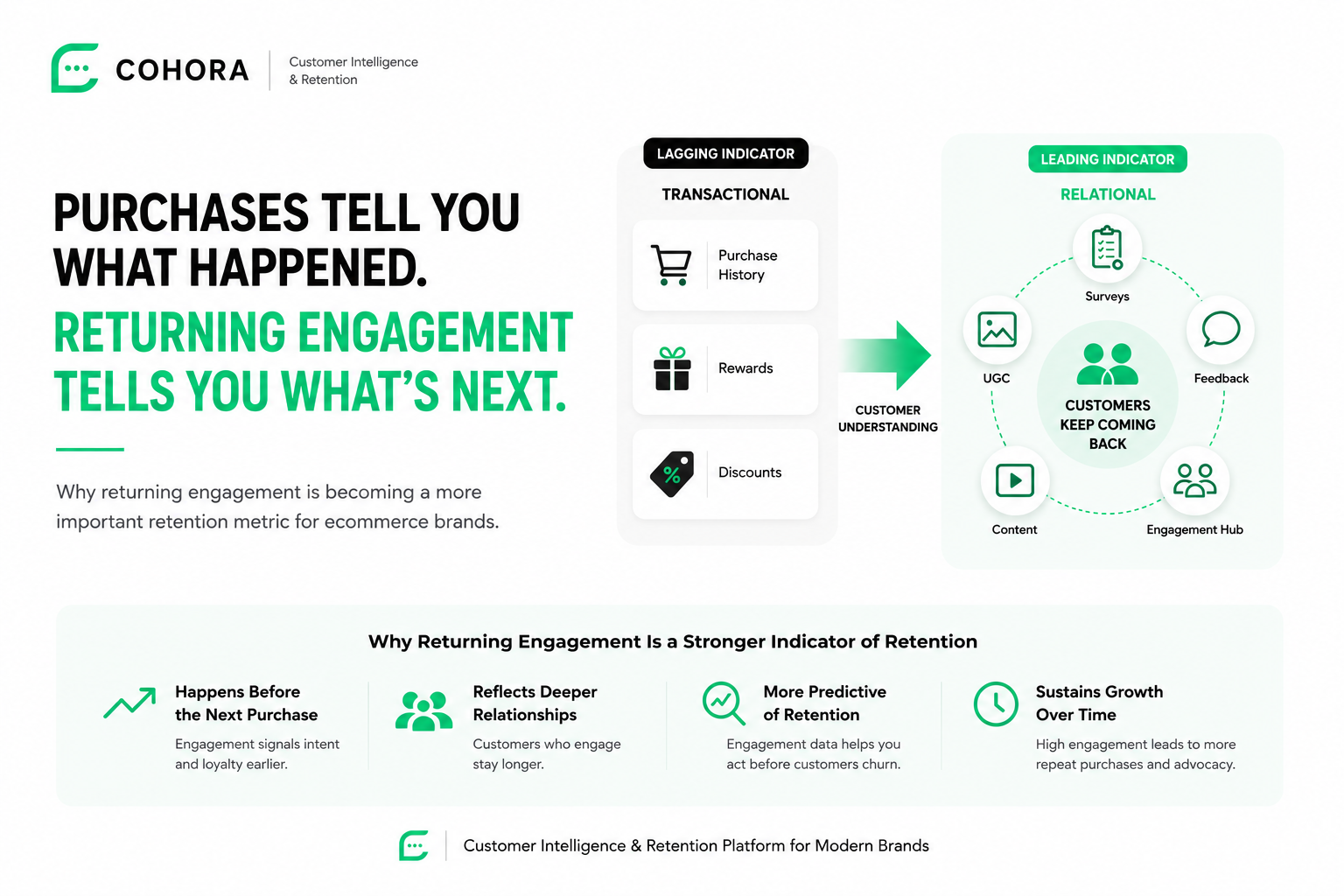
Customer analytics generally focuses on measuring and reporting customer behavior.
Customer intelligence goes further by combining customer signals to help teams interpret that behavior and make better decisions.
A simple way to think about it is:
Customer analytics: What happened?
Customer intelligence: Why might it be happening?
Actionable customer intelligence: What should we investigate or do next?
The goal is not simply to collect more data.
It is to make customer data easier to understand and more useful for retention, lifecycle marketing, reactivation, and growth.
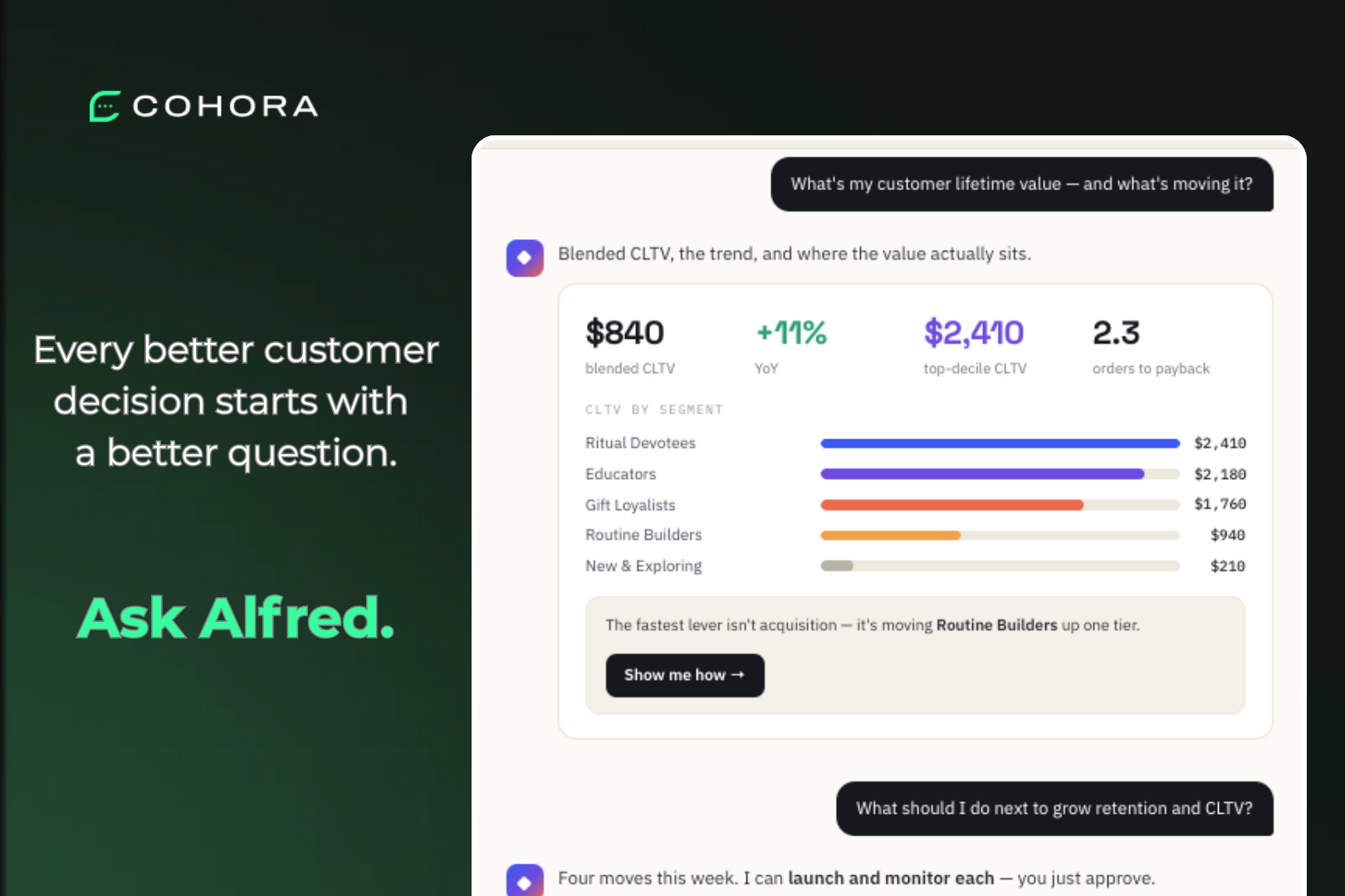
Alfred is Cohora’s AI Customer Intelligence Analyst.
Alfred helps teams investigate connected customer signals by starting with the business question.
Instead of manually digging across multiple dashboards and reports, teams can ask questions such as:
Alfred analyzes connected customer intelligence to surface patterns, risks, opportunities, and recommended areas for further investigation.
The goal is not to give teams another dashboard.
It is to help them move faster from:
What happened?
to:
Why might it be happening?
to:
What should we do next?
Customer data already contains clues about retention, repeat purchases, disengagement, preferences, and future opportunities.
The challenge is connecting those clues and turning them into something teams can use.
That is where customer intelligence becomes valuable.
Not as another layer of reporting.
But as a way to better understand customers, prioritize the right opportunities, and make smarter retention decisions.
Your customer data already has clues. Start asking better questions.
See Alfred in Action →
Customer intelligence is the process of connecting and interpreting customer data to better understand behavior, preferences, motivations, risks, and opportunities. It goes beyond reporting what happened by helping teams understand why customer behavior may be changing and what actions to take next.
Customer intelligence can help teams identify changes in engagement, purchase behavior, loyalty activity, and other customer signals that may indicate declining interest. That gives retention and lifecycle teams an opportunity to act earlier with more relevant outreach, personalized experiences, and targeted reactivation strategies.
Customer analytics typically focuses on measuring and reporting customer behavior, such as purchase frequency, retention rate, lifetime value, and engagement.
Customer intelligence combines those metrics with broader customer signals to help explain why behavior may be changing and what teams should investigate or do next.
A simple way to think about it:
Customer analytics: What happened?
Customer intelligence: Why might it be happening?
Actionable customer intelligence: What should we do next?
Customer intelligence can include purchase history, website behavior, engagement, loyalty activity, preferences, survey responses, reviews, product interactions, first-party data, and zero-party data.
The goal is not simply to collect more data, but to connect the signals that already exist so teams can build a clearer understanding of the customer relationship.
Customer intelligence can reveal changes in customer behavior that may signal declining interest before a customer fully disengages. These signals can include lower purchase frequency, reduced engagement, changes in loyalty activity, or shifts in other behavioral patterns.
Identifying these signals earlier can help teams prioritize retention efforts before churn becomes obvious.
Customer intelligence can help teams understand what differentiates repeat buyers from one-time customers. By identifying the products, behaviors, preferences, or experiences associated with repeat purchasing, lifecycle teams can build strategies designed to encourage more customers to follow similar paths.
AI customer intelligence uses artificial intelligence to analyze connected customer signals, identify patterns, and help teams investigate customer behavior more quickly.
Rather than manually digging through multiple reports or dashboards, teams can use AI to ask business questions directly and surface relevant insights, risks, and opportunities.
Alfred is Cohora’s AI Customer Intelligence Analyst. Alfred helps teams investigate connected customer data by starting with the business question.
Teams can ask questions about retention risk, repeat purchases, customer segments, dormant customers, and revenue opportunities, and Alfred helps surface patterns, insights, and recommended areas for further investigation.

.svg)