June 17, 2026
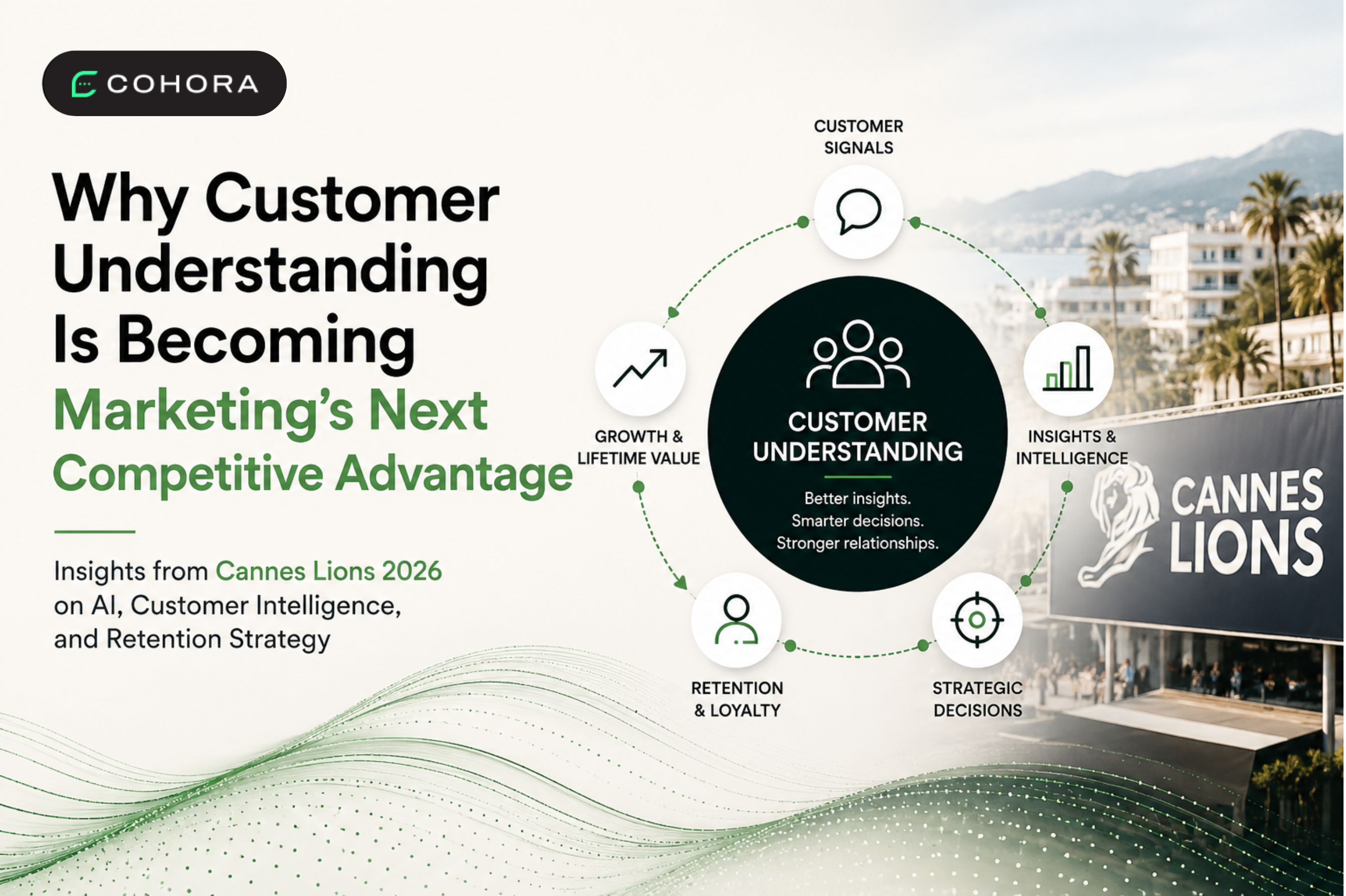
The conversation around AI at this year's Cannes Lions International Festival of Creativity sounds different than it did even twelve months ago.
The debate is no longer centered on whether AI can write content, optimize media buys, or automate campaigns. Those capabilities are quickly becoming part of everyday marketing operations.
Instead, executives are asking a more important question:
How can AI help organizations make better decisions?
According to a recent Ad Age article featuring marketing leaders from Meta, Bose, eos, and Gap Inc., the focus is shifting from execution to judgment. Marketing teams now have access to more data, more automation, and more content generation capabilities than ever before. Yet many organizations continue to struggle with understanding customer behavior, identifying emerging trends, and determining where to invest for future growth.
As AI accelerates execution, customer understanding is becoming increasingly valuable.
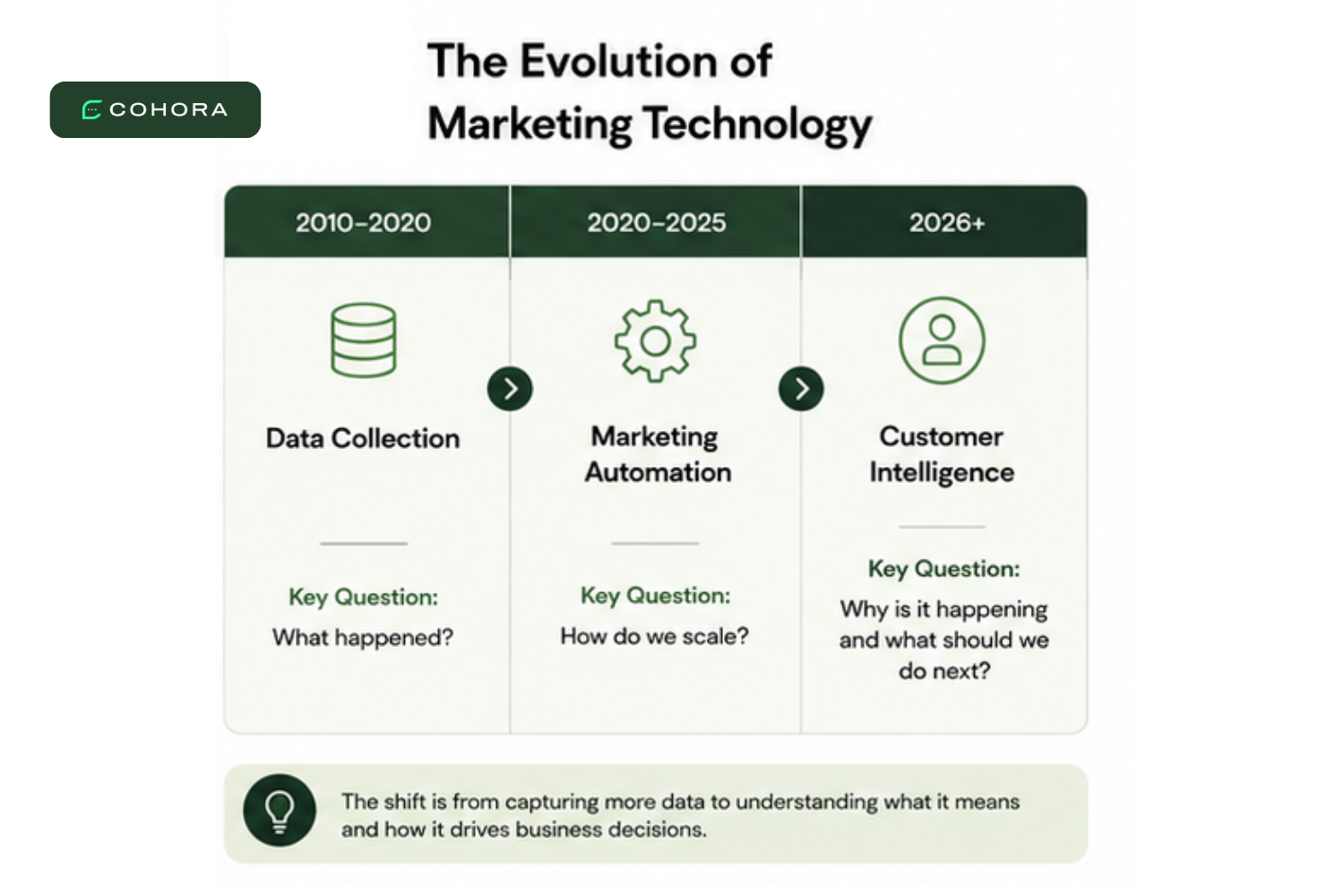
For years, marketing technology investments focused on efficiency.
Organizations sought better targeting, improved attribution, automated workflows, and faster content production. AI has dramatically accelerated progress across all four areas.
Alex Schultz, Chief Marketing Officer at Meta, described the shift in an interview with Ad Age:
"The ad tech and the targeting used to be the hard part, but today, that mechanical execution is becoming the easy part."
The challenge facing marketing leaders today is different.
Teams can launch campaigns faster than ever.
They can generate creative assets in minutes.
They can automate optimization across channels.
None of those capabilities answer questions such as:
Those questions require a deeper understanding of customers, not just campaigns.
Most organizations have no shortage of data.
Purchase history.
Email engagement.
Website activity.
Product reviews.
Survey responses.
Social conversations.
Customer support interactions.
Community participation.
The challenge is transforming those signals into actionable insight.
Carley Caldas, Senior Vice President of Marketing and Creative at eos, highlighted this issue in her comments to Ad Age:
"Marketers have access to more data, comments, reviews, social conversations and cultural inputs than ever before, but turning all of that information into actionable insight is still incredibly manual."
This is a common challenge across retention, loyalty, and customer experience teams.
The information exists.
The context is often missing.
Understanding why customers purchase, advocate, disengage, or churn requires connecting signals across multiple touchpoints and translating them into something leadership teams can act upon.
One of the most notable observations from the Ad Age report came from Bose CMO Jim Mollica.
"I'm more interested in its potential to improve capital allocation."
That statement reflects a growing priority among executives.
Customer intelligence influences decisions related to:
Leadership teams are increasingly looking for evidence that supports resource allocation and investment decisions.
Which customer segments represent the greatest opportunity?
What behaviors indicate future churn risk?
What experiences drive stronger retention?
What feedback appears consistently among high-value customers?
The answers impact revenue, profitability, and long-term growth.

Every customer interaction creates another signal.
Reviews.
Survey responses.
Community discussions.
Social engagement.
Product feedback.
Support conversations.
Purchase behavior.
The result is a growing volume of customer intelligence spread across systems, channels, and teams.
Organizations have more visibility into customer behavior than at any point in history. Yet many executives still struggle to answer fundamental questions about loyalty, retention, and customer intent.
This challenge is creating a new category of investment focused on customer understanding.
Rather than simply collecting customer data or automating campaigns, organizations are looking for ways to uncover the context behind customer behavior.
Why are customers becoming disengaged?
What motivates repeat purchases?
What concerns are showing up before churn occurs?
Which topics, products, and experiences matter most to specific customer segments?
This is where Cohora approaches the problem differently.
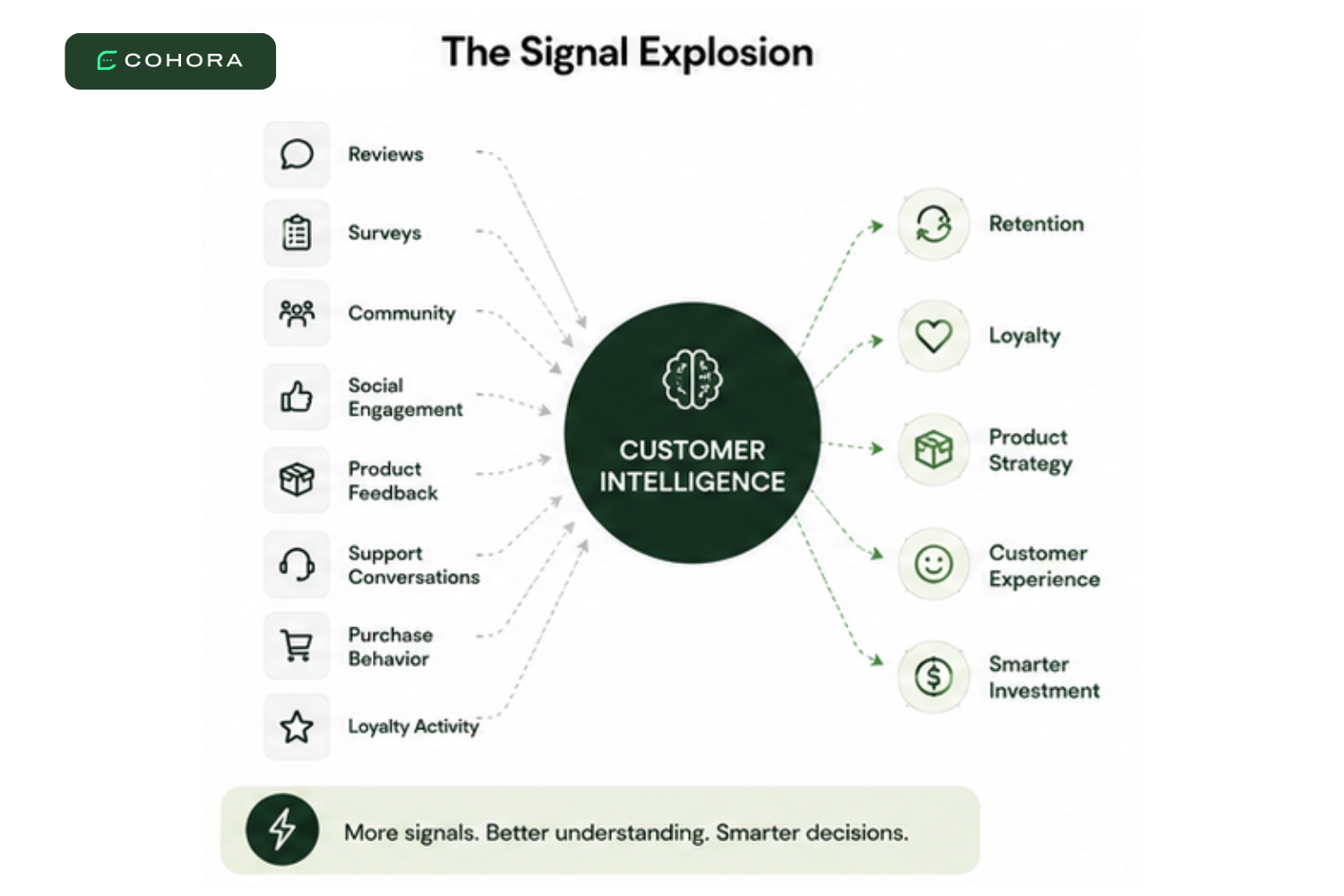
What executives are describing at Cannes is the growing need to connect customer signals to business decisions.
Cohora helps DTC brands gather, segment, and analyze first-party and zero-party customer data to better understand customer interests, motivations, preferences, and engagement patterns.
Rather than relying solely on purchase history and transactional metrics, brands gain direct insight into what customers are thinking, experiencing, and expecting from the relationship.
Those insights help teams make more informed decisions around retention, loyalty, customer experience, product strategy, and lifecycle marketing.
The objective is not more reports, dashboards, or data points.
It is a clearer understanding of customer behavior and the confidence to act on it.
The same questions being discussed by executives at Cannes are the questions many brands are trying to answer every day:
As AI continues to increase the volume of available data, the ability to interpret customer signals and turn them into meaningful action will become increasingly important.
The most valuable takeaway from this year's Cannes conversations may be surprisingly simple.
Marketing teams do not need more ways to create content.
They need better visibility into their customers.
Execution has become faster.
Signals have become more abundant.
The ability to interpret those signals is becoming increasingly important.
That is why conversations about customer intelligence, customer understanding, retention analytics, and first-party data are appearing alongside discussions about AI.
Organizations that can connect customer signals to business decisions will be better positioned to improve retention, increase customer lifetime value, and make more confident investment decisions.
Not because they have more data.
Because they understand what the data is telling them.
According to reporting from Ad Age, marketing leaders are increasingly focused on how AI can improve decision-making, customer intelligence, and capital allocation rather than simply automating campaign execution.
AI has made campaign creation, targeting, and optimization significantly more accessible. Competitive advantage increasingly comes from understanding customer motivations, behaviors, preferences, and engagement patterns.
Customer intelligence is the process of collecting and analyzing customer signals such as purchase behavior, feedback, engagement, survey responses, reviews, and community interactions to support better business decisions.
AI can identify patterns across large volumes of customer data, summarize feedback, analyze sentiment, detect behavioral trends, and surface insights that would be difficult to uncover through manual analysis alone.
Customer data consists of individual pieces of information such as transactions, clicks, reviews, and survey responses. Customer intelligence provides context and insight that help organizations understand what those signals mean and how to act on them.
Marketing leaders are under increasing pressure to justify investments and demonstrate business impact. Better customer intelligence helps organizations identify where resources can generate the greatest return.
Customer intelligence helps organizations identify engagement trends, understand customer needs, detect churn risks, and uncover opportunities to improve loyalty, repeat purchases, and customer lifetime value.
Most marketing leaders do not believe AI can replace strategic judgment. AI can provide analysis and recommendations, but decisions involving brand positioning, investment priorities, customer experience, and organizational strategy still require human leadership.

.svg)